
US-Israel-Iran War: Are We Looking at World War III?
- Strait of Hormuz is the bone of contention
- Energy markets have become volatile and economies are disrupted
The language coming out of West Asia is no longer cautious. It is openly alarming. Iranian officials have warned that continued pressure and blockade could push the region into a wider war. The United States, on the other hand, has made it clear it will not lift its naval chokehold without major concessions. The centre of this confrontation is not just ideology or even nuclear capability, it is control over the Strait of Hormuz.
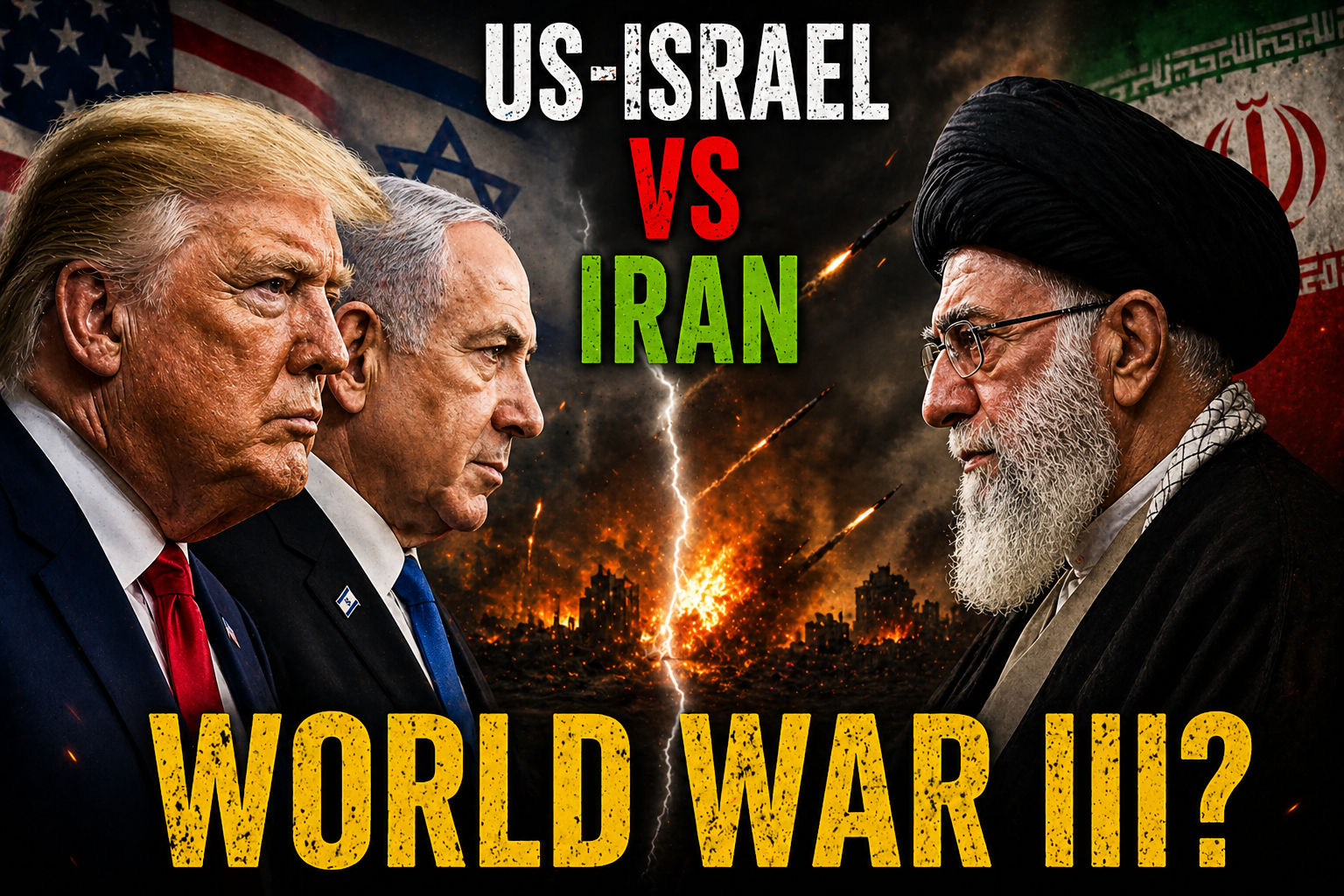
The world is not yet in a global war, but the elements are falling into place. Multiple countries are involved, directly or indirectly. Energy supplies are being weaponised. Trade routes are being controlled. Military forces are operating in close proximity with little room for error. Iran has made it clear that if its economy is strangled, it will choke the world’s oil lifeline. The United States, in turn, has warned that it will not allow what it calls “extortion” through control of the Strait.
Nuclear on the Backburner
The nuclear issue remains in the background, often used in political messaging and negotiations. But on the ground, the real struggle is far more immediate. It is about who controls the flow of energy, who dictates the rules of passage, and who holds leverage over the global economy. The Strait of Hormuz has become the pressure cooker.
This is why many observers are beginning to use the phrase “World War III,” not as a formal declaration, but as a reflection of the scale and stakes involved. When a single waterway can shake global markets, pull major powers into confrontation, and bring multiple regions into conflict, the line between a regional war and a global one begins to blur.
Open and Shut Scenario
In recent days, the situation has changed by the hour. The Strait has been opened, then shut, briefly reopened, and shut again. Each move has been followed by sharp reactions from Iran and the United States. The result is a tense stand-off that is now affecting global trade, energy flows, and economic stability.
At present, Iran has once again tightened its control over the Strait. This comes after a short-lived announcement that commercial shipping could resume. That opening created brief optimism. Oil prices softened. Markets reacted positively. But within hours, the situation reversed. Iranian authorities said the reopening was conditional and accused the United States of continuing economic pressure. The Strait was effectively restricted again, with ships warned to stay clear or seek clearance.
US Naval Presence in the Region
The United States has maintained a strong naval presence in the region. Its blockade of Iranian maritime trade continues. Warships, aircraft, and surveillance systems are deployed across the Gulf. Ships attempting to reach Iranian ports have been intercepted or turned away. Washington has said it will continue these actions until Iran agrees to wider negotiations.
This back-and-forth has created a cycle of escalation. Each side is responding to the other’s move. There are no stable conditions on the ground. Announcements of de-escalation are quickly overtaken by new tensions.
Two Indian Ships Attacked
The risks are no longer theoretical. They are visible on the water. Iranian forces have taken aggressive action against commercial vessels. Two India-linked ships were recently targeted near the Strait. They were forced to change course after coming under threat. While there were no casualties, the incident has raised serious concerns. India has reacted strongly. Diplomatic channels have been activated. Prime Minister Narendra Modi has spoken with U.S. President Donald Trump and French President Emmanuel Macron to ensure the safety of shipping and avoid further escalation.
High Stakes for India
For India, the stakes are high. A large portion of its oil imports passes through the Strait of Hormuz. Any disruption affects fuel supply, prices, and the broader economy. The targeting of India-linked vessels has made the situation more urgent for New Delhi.
To understand the scale of the crisis, it is important to look at how events have unfolded over time.
Unending Since February 28
The current phase of the war began on February 28, 2026. On that day, major airstrikes were carried out on Iranian targets. These strikes hit military facilities and leadership positions. Iran’s top leadership suffered heavy losses in the initial phase. This marked a major turning point. Iran responded immediately with missile and drone attacks on multiple targets across the region, including U.S. bases and allied positions.
At the same time, Iran moved to shut down the Strait of Hormuz. This was a strategic move. The Strait is a narrow passage, but it carries nearly one-fifth of the world’s oil supply. Blocking it has global consequences. Within days, shipping traffic dropped sharply. Tankers avoided the region. Insurance costs rose. Some vessels were damaged in the early phase of the conflict.
By March 4, Iran had effectively declared the Strait closed. It warned that any ship entering without approval could be targeted. This created a near-total halt in traffic. Oil exports from Gulf countries fell sharply. Global supply tightened. Prices surged.
Volatile Energy Markets
In the weeks that followed, the impact spread quickly. Energy markets became volatile. Airlines began rerouting flights. Some airports in the region faced disruptions. Supply chains started to feel the pressure. The situation was compared to earlier global energy shocks, though the speed of escalation this time was faster.
On March 19, the United States began military operations aimed at reopening the Strait. Air and naval strikes targeted Iranian assets, including drones and small naval units. The goal was to restore freedom of navigation. However, the effort faced challenges. Iran relied on smaller, mobile tactics such as sea mines and fast boats. These methods made it difficult to secure the waterway fully.
Human Cost of War
By late March, the human cost of the war had become clear. Thousands of people had been killed across the region. In Iran alone, deaths reportedly crossed 3,500. A large number of those killed were civilians. Casualties were also reported in neighbouring countries, including Iraq and Lebanon. Many of these figures are likely undercounts, as access to affected areas remains limited.
The conflict also affected maritime workers. Several merchant ships were hit in the early phase. Sailors were injured or killed. Others went missing. Shipping companies began pulling back from the region. Traffic through the Strait fell to a fraction of normal levels.
In early April, there was a brief moment of hope. A temporary pause in fighting led to partial reopening of the Strait. Ships began to move again. Oil prices stabilised slightly. There was cautious optimism that tensions might ease.
But this pause did not last.
On April 13, the United States escalated the situation by announcing a naval blockade targeting Iran. This marked a new phase in the conflict. The blockade aimed to cut off Iran’s maritime trade and force it into negotiations. The announcement had an immediate impact. Oil prices rose sharply. Stock markets reacted with concern.
The blockade quickly began to affect shipping. Vessels heading to Iranian ports were stopped. Trade flows were disrupted. Iran responded strongly. It warned that if its exports were blocked, it would block others as well.
This led to renewed tension in the Strait. On April 17, Iran signalled a possible reopening. It said ships could pass, but only under certain conditions. This created confusion. Some vessels attempted to move. Others waited for clarity.
By April 18, the situation had shifted again. Iran tightened control once more. Restrictions were reimposed. Shipping slowed again. Attacks and threats returned. The Strait once again became a high-risk zone.
Massive Economic Impact
The economic impact of this conflict has been massive. The disruption to oil supply has been one of the largest in recent history. Hundreds of millions of barrels have been removed from the market. The immediate loss in oil trade alone is estimated at over $50 billion in just a few weeks.
The broader cost is far higher. Countries in the region have already suffered losses exceeding $100 billion. Iran has seen extensive damage to infrastructure, industry, and energy facilities. Estimates of total economic damage range from $300 billion to nearly $1 trillion.
The United States has also incurred heavy costs. Military operations, deployments, and logistics have run into tens of billions of dollars. These costs are expected to rise if the conflict continues.
Beyond direct losses, the indirect impact is spreading across the global economy. Oil price volatility is affecting inflation. Transport costs are rising. Manufacturing and trade are slowing. Investors are becoming cautious.
Global growth forecasts have been revised downward. Economies that depend heavily on imported energy are under pressure. Currency values are fluctuating. Governments are being forced to reassess budgets and subsidies.
Shipping has been one of the worst-hit sectors. At one point, traffic through the Strait dropped from around 20 million barrels per day to less than 4 million. Many ships are waiting outside the region. Others are taking longer routes, adding time and cost.
Insurance premiums for ships have surged. Some routes are now considered too risky. This has reduced overall capacity. Delays are increasing.
Air travel has also been affected. Flights are being rerouted to avoid conflict zones. Cargo operations are disrupted. This is adding pressure to global supply chains.
At the diplomatic level, there is constant activity. Leaders are in touch. India, European countries, and others are pushing for de-escalation. But progress is slow. Positions remain firm.
The biggest concern now is the lack of clear limits. Neither side wants a full-scale war. But both are willing to take risks. This creates a dangerous situation. A single miscalculation could lead to a much larger conflict.
For now, the situation remains fluid. Ships wait for signals that can change within hours. Markets react to every development. Governments remain on alert.
What happens next in the Strait of Hormuz will not just shape the outcome of this conflict. It will also influence the direction of the global economy and the balance of power in the region.